
Inland Empire freight coalition prepares for AB 98 logistics limits as health, sustainability concerns mount
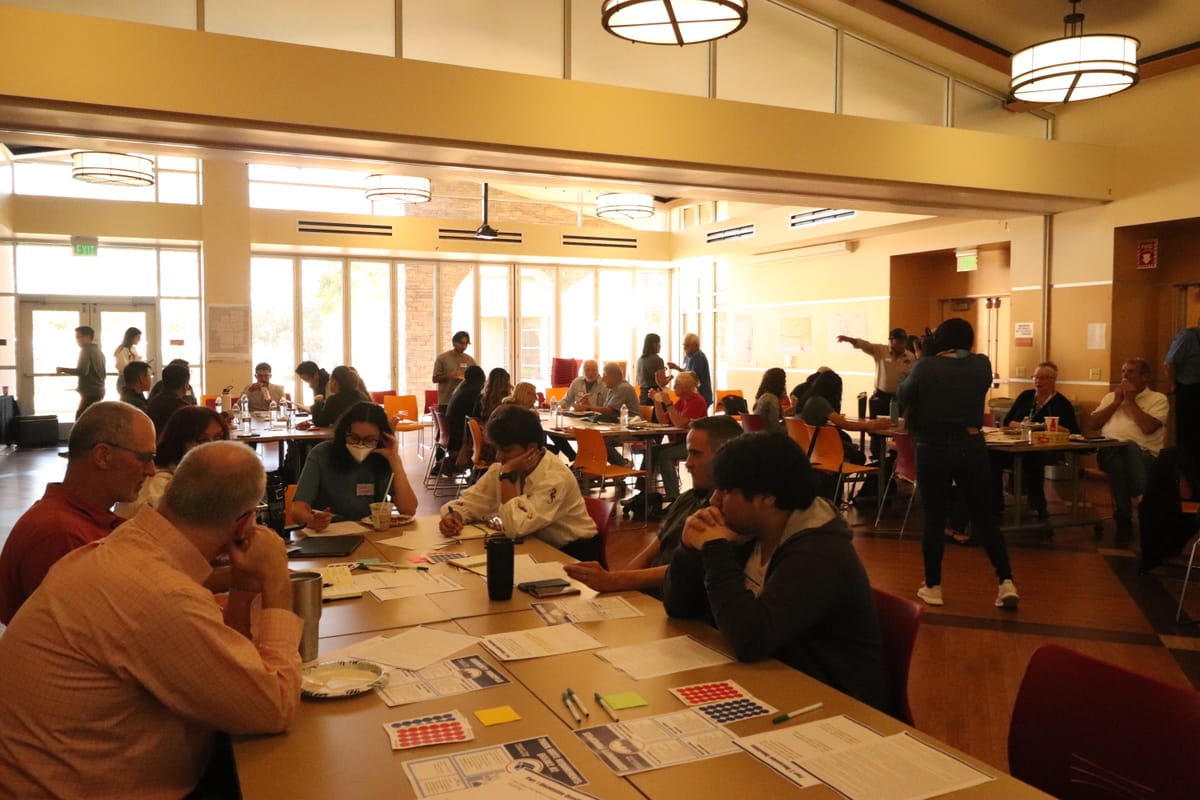
Inland Empire community advocates, non-profits and elected officials met at the Mead Valley Library last week, Nov. 7, to discuss transportation planning and Assembly Bill 98 (AB 98), or the Planning Logistics and Neighborhood Standards (P.L.A.N.S) Act. Co-authored by Senator Eloise Gomez Reyes and Assemblymember Juan Carrillo and approved last September, AB 98 is set to take effect January 2026 for San Bernardino and Riverside Counties.
The bill requires more green infrastructure investment and limits how close logistics operations, including truck routes and warehouses, may be to sensitive receptors like homes, parks, schools and hospitals.
The summit, organized by the Freight Communities Action Coalition, and funded by a $250,000 educational grant from California Climate Investments, inaugurated the coalition’s move to improve the health and sustainability of the region in partnership with concerned residents, researchers and representatives.
Franco Pacheco, a resident of Mead Valley and chairman of the Freight Communities Action Coalition, says the summit was significant because of the chance for community input and foresight. He pointed to the approval of the Cajalco Commerce Center, a one million square foot warehouse project proposed by Hillwood Investment Properties, as an example of a project with poor truck route planning.
“Because truck routes were not really implemented in the passing of the Cajalco Commerce Center, future truck routes are now going to have to be mapped around that project,” Pacheco said.
Roughly 40 people participated in the summit, including Jose Medina, district one supervisor to Riverside County, and 60th District Assemblymember Dr. Corey Jackson.
For Jackson, AB 98 is a work in progress.
“Many of us wanted it to go further,” Jackson said. “But we're going to continue to make sure that the emissions that are being put into our region . . . are not born on our lungs and our children's lungs.”
While Jackson explained that the region still suffers from air pollution, he noted that there are “a lot of great investments happening here—so we want to make sure that we get it right.”
Supervisor Medina shared this attitude, citing his office’s Mead Valley Plan, a $1.3 million fund allocated for community meetings to discuss upcoming projects.
“I'll be very upfront,” Medina said. “There are 12 projects that are coming in from the Board of Supervisors, probably within the next year. So how does the community feel? What are the pros? What are the cons?”
According to the report “A Region in Crisis,” the Inland Empire is home to roughly one billion square feet of warehouses, and many are weary of the development.
Gerard Avilla, a longtime Mead Valley resident, opposes the influx and the community’s mistreatment.
He decried previous district supervisors and explained he was suspicious of the future of warehouses jobs.
“They're really working hard to [automate] these warehouses,” Avilla said. “So these jobs—they go—and these previous supervisors . . . they're elected for one term, perhaps two terms, and they're gone; they just leave us over here with the problem.”
This was a point made by Susan Phillips, director of the Robert Redford Conservancy of Southern California Sustainability.
“Environmental benefits and environmental detriments tend to stay in place,” Phillips said. “And the only way to get around that is actually through the community.”
She later cited Sherry Arnstein’s “A Ladder of Citizen Participation,” tying the region's warehouse sprawl to the “empty ritual of civic participation.”
In short, Arnstein’s “Ladder” concept refers to the degrees of power citizens have in decision making, from non-participation to citizen control.
“Experts and technocrats . . . check a community box to get input at certain times of [the approval] process, but in effect, the decision has already been made,” Phillips said.
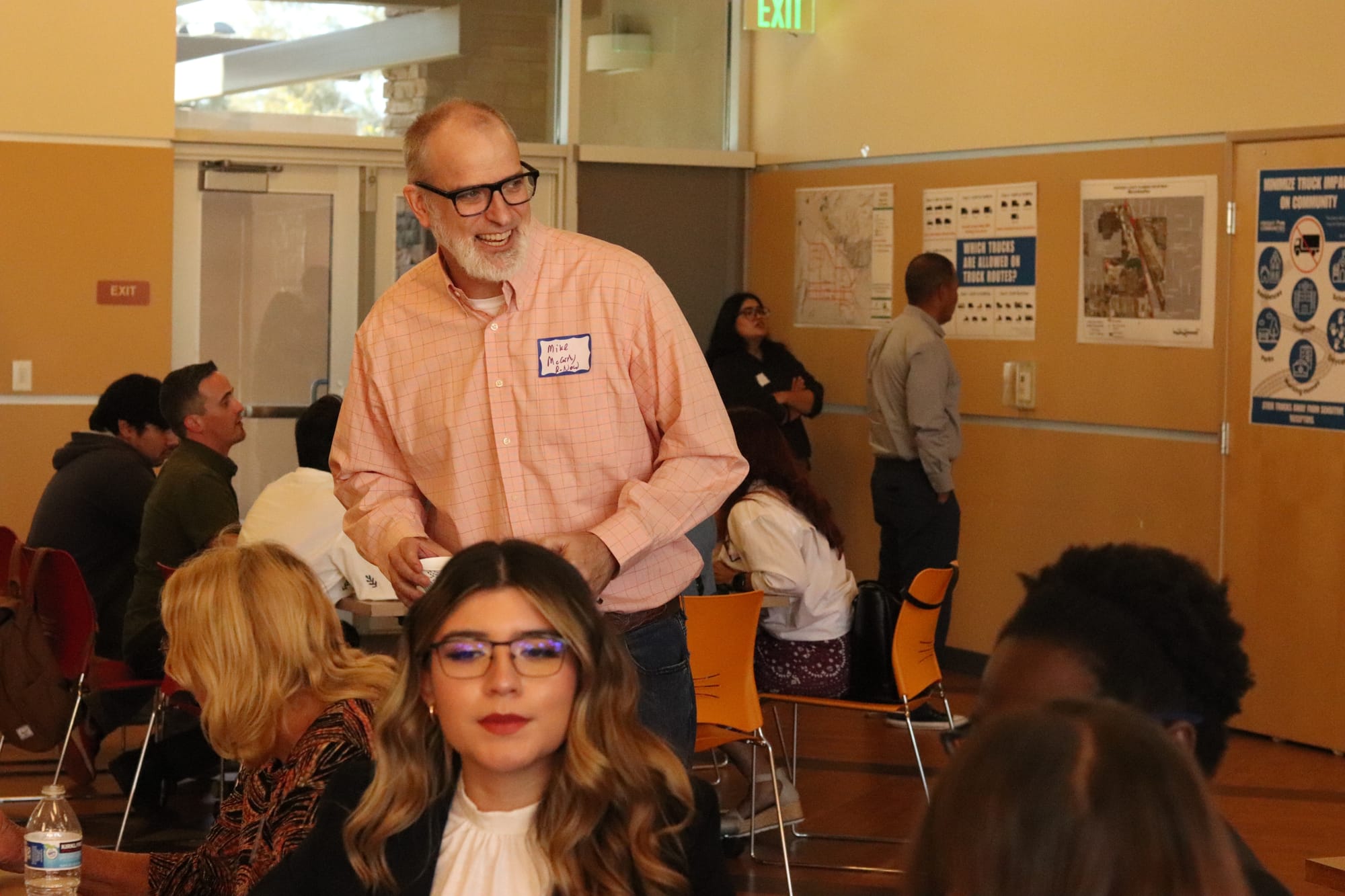
Following the summit, The Frontline Observer spoke with Riverside Neighbors Opposing Warehouses (R-NOW) co-founder Mike McCarthy. He emphasized locally informed discourse as central to the sustainability of the region, highlighting the dual challenge of logistics growth.
“We're trying to center community voices because we feel like our voices are being excluded from transportation planning and how many warehouses are being brought into our region,” McCarthy said. “Because it's really a land use and transportation issue combined, and we need to have these conversations together.”
Despite the challenges, McCarthy was inspired by what he considered a “great dialog.”
“It was a melange of community voices and elected officials all coming together to address this issue in a productive way,” he said. “It's really about building relationships, because I don't think that community leaders are trying to exclude us. They just have lots of other issues that they're dealing with, and so sometimes community members have to speak up and prompt this discussion.”
The coalition hopes to have a one page summary of the ideas discussed during the summit made publicly available by the end of the year. A follow-up event will be scheduled at a later date.